
Interpreting Relativity
through the lens of Reality Fractal

Albert Einstein developed Special Relativity in 1905 and later General Relativity in 1916. Special relativity addressed situations involving constant velocities and inertial reference frames (where there is 0 acceleration). General Relativity (GR) is the superset of Special Relativity, as it can describe both inertial and non-inertial reference frames. GR says that gravity is the result of the curvature of spacetime caused by mass and energy. The consequences of this idea are that space and time are not constant, but rather change depending on the observer’s frame of reference. This leads to the mind-bending ideas of length contraction and time dilation.
When something has a lot of energy (eg, traveling near the speed of light), lengths and times get shorter. The famous twin paradox demonstrates that if you had a twin on Earth and another in a spacecraft traveling at a significant percentage of the speed of light, upon the traveling twin's return, they would be younger than their Earthbound twin. Alternatively, if one finds themselves orbiting closely around a very massive object, like a black hole, then the same effects are present. A good example of this is depicted in the movie Interstellar. An extreme case can be thoroughly described by determining what would happen if you fell into a black hole.
As one falls into a supermassive black hole (not a stellar-mass one to avoid spaghettification), looking back at the Universe, one would see blueshifting of light. One would watch the entire future of the Universe unfold during the descent until the Universe collapses into a singular point of light. Note the figure-ground reversal that occurs. Initially, it is a black hole in the Universe, but after crossing the event horizon, the Universe is a white hole in the black void. I will discuss how exactly to interpret black holes in an upcoming post. If your mind hasn’t yet been blown by Reality Fractal (RF), just wait. I have obsessed over black holes since I was in middle school, so much so that I became an astronomer. Properly interpreting black holes is the key to RF that quite literally ties everything together.
Applying RF to Einstein’s GR yields a new understanding of reality. Both reference frames exist, and they differ from one another. The ONLY WAY to have both of the reference frames existing in the same reality is if there is the construction of a relational medium.
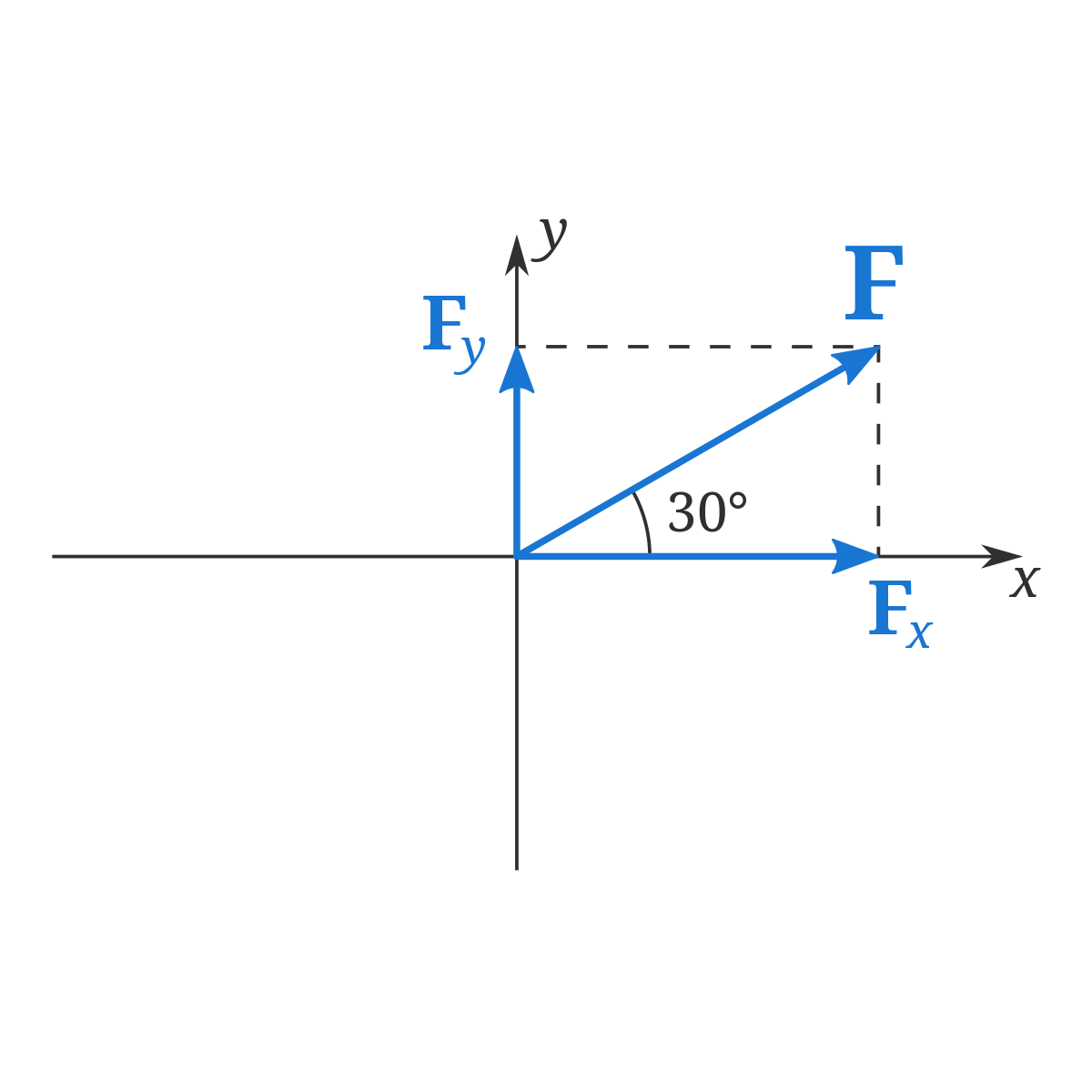
One can think of it like a line. One person’s perspective is a line on the x-axis, and the others’ is the y-axis. These axes are generated by the observers collapsing their respective wave functions. When they meet up again and share the same part of reality, they then co-generate a consensus that includes both the x and y components (a resultant vector, F). F only exists due to the interaction between the two differing reference frames. If the beings never interacted with each other, then, importantly, the consensus F would not exist. The incongruency between the two perspectives must be reconciled by the inclusion of a generated relational medium that contains each observed component. If the frames never meet, then their components are the only reality.
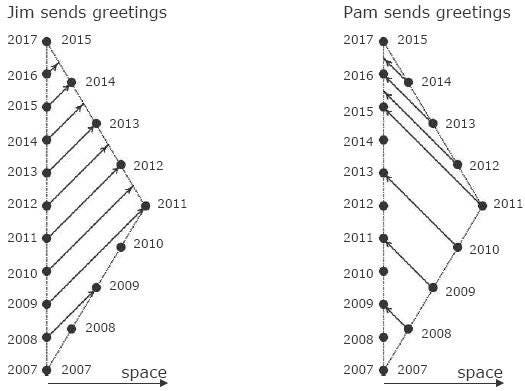
An important clarification to make is that this relational medium (the warping of spacetime) is embedded within RF. There is also the fundamental relational medium of awareness, which transcends RF and is NOT a construction. In other words, relational media within RF are constructed, whereas awareness itself is the transcendent fundamental relational medium that allows for the possibility of constructed relational media.
Now I have laid out how quantum mechanics works in the Ferko Interpretation, and we have just addressed General Relativity. The goal of unifying QM with GR is laid bare in the RF structure. It shows very clearly how these two disciplines are connected: the observer. The observer is the bedrock of reality. The deeper one probes in either domain, the less applicable the theories are. For example, GR breaks down at the singularity of black holes, and QM breaks down beyond the Planck scale. RF predicts that below QM, there is a more precise paradigm. Similarly, above GR, there is also a more accurate paradigm. The two will become closer and closer to each other, but never the twain shall meet.
The reason they never meet is that instead of the observer detecting these aspects of reality, they are projecting them. The more one probes reality, the more reality gets projected. Since reality is a multifractal, more projections yield more perimeter to be explored. The perimeter of a multifractal is effectively infinite, and therefore, reality will never be unified through physics, and metaphysics is the only solution.
The answer requires a figure-ground reversal. QM and GR cannot unify since they are a bifurcation of the observer. The observer is the union, and the paradigms are the split. They will always be split since they are both constructed by the observer. Going into these domains does not lead to union; it is only through transcendence that union is possible. Therefore, RF predicts we will never find a physics TOE due to the structure of reality.
RF does, however, provide the solution: the observer. The observer is the only thing that exists fundamentally, and its fundamental attribute is awareness. People like Eric Weinstein are trying to develop the successor to existing theories, and while these theories will unlock more control over the Universe for humanity, they will never unify. Now you can see that interpreting QM and GR through the lens of RF brings about a clarity that is lacking in physics. These disciplines examine the effectively infinite perimeter without recognizing it as such.
Very interesting!
Why does awareness even have a need for multiple observers, let alone a consensus reality? Wouldn't a solipsistic observer be unable to tell the difference between other genuinely conscious perspectives and its own unlimited projection? Why go the seemingly extra step if one can't tell?